Guide · Physical · Health and emergencies
What you train against matters more than what it is called.
Every martial art claims to work. The one test that predicts whether it will is live resistance: regular sparring against a partner who is really trying to stop you. Arts that spar build skill that survives adrenaline; arts that only drill often do not.
The second test is range. A confrontation can happen at kicking distance, in a clinch or on the ground, often in that order. No single art covers all three, which is why the comparison below matters.
In this guide
The comparison
Skif's judgment, from how each art trains and what it leaves out. The quality of a school, and whether it spars, matters more than the art's name.
Boxing
- Range
- Punches
- Live sparring
- Yes
- Strong outside the gym
- Distance, head movement, hand speed, fitness
- Weak outside the gym
- No kicks or grappling; bare hands break on skulls
- Training injury risk
- Medium — head impacts
Muay Thai
- Range
- Punches, kicks, knees, elbows, clinch
- Live sparring
- Yes
- Strong outside the gym
- Clinch control, knees, toughness
- Weak outside the gym
- Little ground work
- Training injury risk
- Medium to high
Kickboxing
- Range
- Punches and kicks
- Live sparring
- Yes
- Strong outside the gym
- Boxing's strengths, plus kicks
- Weak outside the gym
- Clinch and ground
- Training injury risk
- Medium
Wrestling
- Range
- Takedowns, control
- Live sparring
- Yes
- Strong outside the gym
- Staying on your feet, getting back up, control
- Weak outside the gym
- No strikes; a takedown onto concrete can do serious harm
- Training injury risk
- Medium
Judo
- Range
- Throws, pins
- Live sparring
- Yes
- Strong outside the gym
- Throws, balance, and breakfalls: falling safely is a skill in itself
- Weak outside the gym
- No strikes; throws onto hard ground are dangerous
- Training injury risk
- Medium
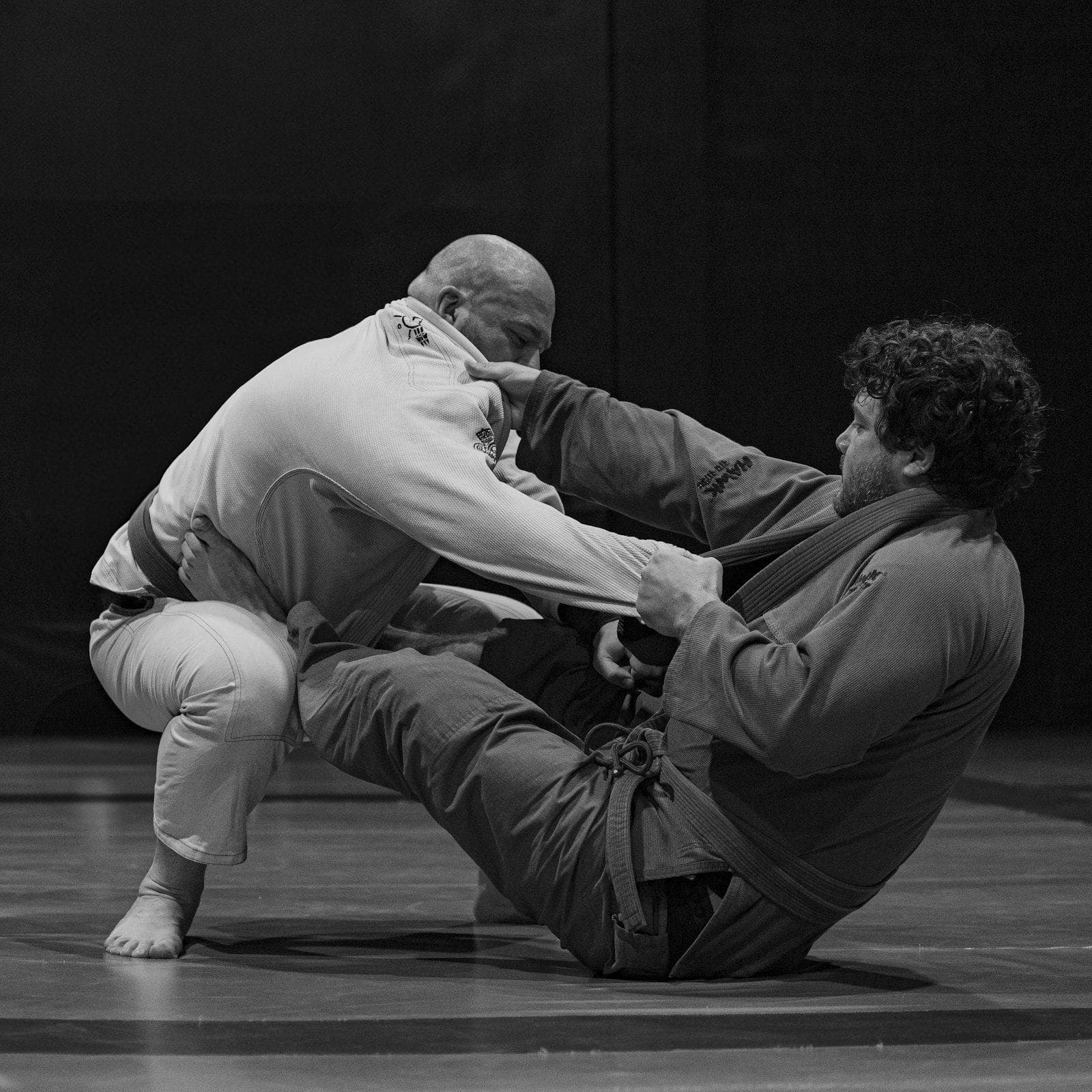
Brazilian Jiu-Jitsu
- Range
- Ground control, submissions
- Live sparring
- Yes
- Strong outside the gym
- Control without striking; calm under pressure; size matters less
- Weak outside the gym
- The ground is a bad place with several attackers or on concrete
- Training injury risk
- Low to medium — joints
MMA
- Range
- All ranges
- Live sparring
- Yes
- Strong outside the gym
- The broadest live test of all ranges
- Weak outside the gym
- Sport rules: no weapons, one opponent
- Training injury risk
- High
Krav Maga
- Range
- Mixed, weapons, several attackers
- Live sparring
- Varies by school
- Strong outside the gym
- Scenario training, weapons awareness, aggression under stress
- Weak outside the gym
- Quality varies widely; many schools rarely spar
- Training injury risk
- Low to medium
Systema
- Range
- Movement, breathing, strikes
- Live sparring
- Varies by school
- Strong outside the gym
- Breathing and relaxation under stress
- Weak outside the gym
- Little open testing; quality varies
- Training injury risk
- Low
Kali / Escrima
- Range
- Sticks, blades, empty hand
- Live sparring
- Partly
- Strong outside the gym
- How weapons move and how fast
- Weak outside the gym
- Drills can drift from reality without sparring
- Training injury risk
- Low to medium
Parkour
- Range
- Movement
- Live sparring
- Not a fighting art
- Strong outside the gym
- Escape: speed, terrain, obstacles
- Weak outside the gym
- Does nothing once you are caught
- Training injury risk
- Medium — falls
A sensible combination
For most adults: one striking art that spars (boxing, kickboxing or Muay Thai), one grappling art that spars (wrestling, judo or BJJ), and the habit of running. That covers the three ranges and the exit.
For a smaller person, grappling arts matter more: leverage lets someone control a larger, untrained person without trading blows. For children, judo, wrestling and BJJ teach falling, balance and control without punches to the head.
Every one of these carries a training risk, and that is part of the calculation, not a reason to avoid them. Sparring to the head has costs that build up over years; good gyms manage them, poor ones do not.
How to choose a school
- Watch a class first
- Any good school lets you. See whether people spar, and how they treat beginners.
- Look for resistance
- Drills are fine; drills alone are not. Ask how often students train against a partner who resists.
- Watch the injury culture
- Hard training is normal; injured students and ego-driven sparring are not.
- Distrust promises
- “Guaranteed disarm”, “deadly techniques” and secret methods are marketing. Real instructors talk about probabilities.
- Check the instructor
- Who taught them, how they compete or test their students, and whether they send people to other gyms when it helps.