Exits first
On entering a bar, a train or a square, note two ways out. It takes a second and becomes automatic within weeks.
Guide · Physical · When things go wrong
Self-defence is a ladder, not a technique. Each rung costs more and risks more than the one below it, so you climb only as far as you must: avoid, escape, de-escalate, defend, recover.
Knowing the ladder is also what lets you live freely. Someone who knows how they would leave a bad situation goes out at night, travels and takes the tram home without carrying fear with them.
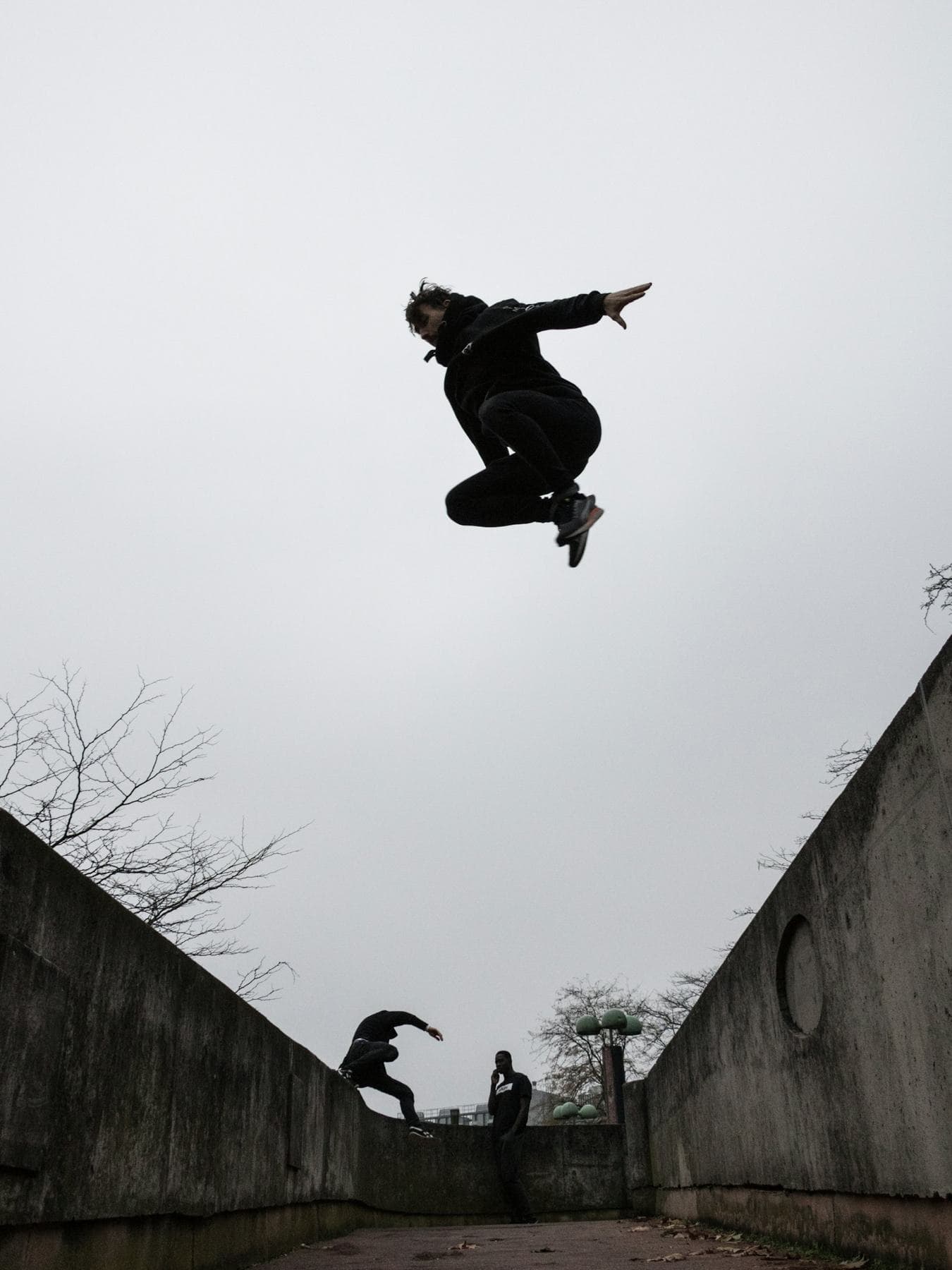
Parkour trains you to see a street as routes rather than walls. That habit is the most underrated self-defence skill there is: in a bad moment, you already know three ways out.
On entering a bar, a train or a square, note two ways out. It takes a second and becomes automatic within weeks.
A table, a parked car or a bollard between you and someone else is distance they have to go around, and time for you.
A low wall, a fence, a flight of stairs: places you can go quickly that a pursuer has to think about.
Run towards a lit shop, a taxi rank or a crowd, not into an empty park or a dead-end street.
Can you sprint 200 metres and keep running? Escape is a physical skill. Interval running trains it better than any technique.
Shoes you can run in, and hands not full of shopping when you walk somewhere you feel unsure.
Article 15 of the Swiss Criminal Code: anyone attacked without right, or threatened with an imminent attack, may repel it in a manner appropriate to the circumstances. The same right covers defending someone else.
Article 16: if a defender goes beyond what was appropriate, the court reduces the sentence; and if the excess came from excusable excitement or shock at the attack, there is no guilt at all.
Two things follow. Ending the danger is defence; continuing after it has ended is not. And what is appropriate depends on the attack: a slap does not justify a weapon. Other countries' rules differ, some sharply. This is a description of the law, not legal advice.
Avoid
Escape
De-escalate
Defend
Recover
No. It is the outcome every serious self-defence instructor aims for. Nobody is hurt, nobody is in court, and you go home.
Yes. Throw it a little away from you if you can and leave the other way. Property can be replaced or recovered; a fight over it can change your life.
The same ladder applies to both of you, and the law covers defending another person. Escaping together is still the first choice.
A course gives you skills; habits keep you safe. Awareness and escape are practised daily, without a gym.