Field 06 of 10 · Health and emergencies
The first minutes are yours.
In a collapse, a bad fall or a fire, the minutes before professionals arrive decide a great deal, and the person there is usually you. First aid, a kit you can find, and a household that knows the emergency numbers are among the most effective safety steps there are.
Skif covers preparedness, never treatment. It complements medical care and never replaces it, and it is not an emergency service: the numbers to call are below.
What can go wrong
- A medical emergency with nobody knowing what to do
What helps, least intrusive first
Every step a Safety Plan can recommend here. Free steps come first; privacy and freedom costs use the four-point scale explained under How Skif decides.
- CHF 100–500A first-aid and preparedness trainer
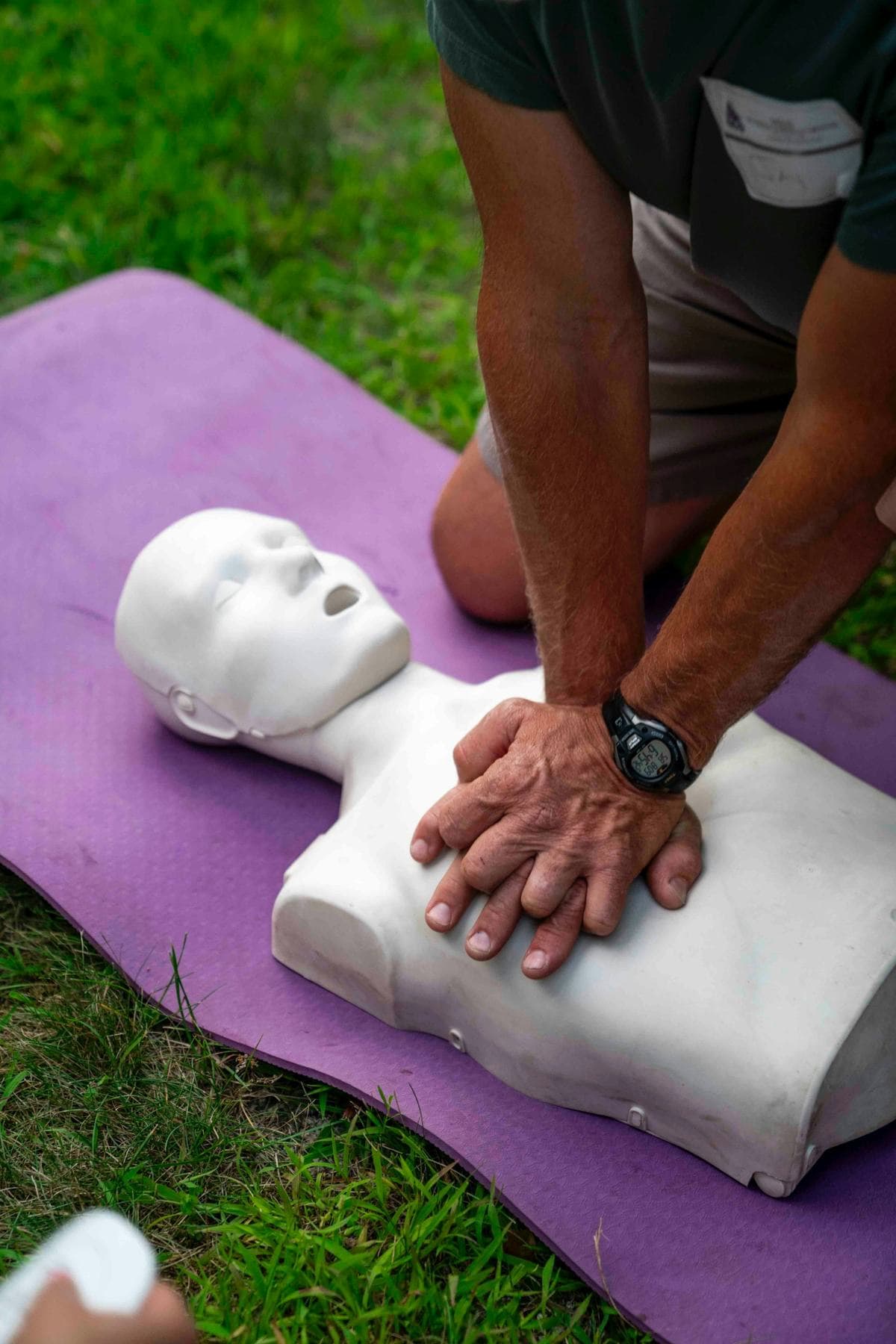
A first-aid course for you, your household or your staff
A day or two of your time; worth refreshing every few years.
Privacy cost0/3Freedom cost0/3Benefit high - CHF 100–500A first-aid and preparedness trainer
A preparedness session with a trainer: your plan practised once, with first aid and getting out safely
A few hours; practising once makes a plan real.
Privacy cost0/3Freedom cost0/3Benefit medium - FreeSomething you do
Know 144 (ambulance), 117 (police), 118 (fire) and 112; set an emergency contact on your phone; know where the nearest defibrillator is
Your emergency contact is readable from the lock screen.
Privacy cost1/3Freedom cost0/3Benefit medium - FreeSomething you do
Write a one-page emergency plan: who calls whom, where to meet, a contact outside the city, and what to grab
An hour together; the people on it know each other's numbers.
Privacy cost1/3Freedom cost0/3Benefit medium
Act on it
- 10 min · 7 stepsBefore a party or festivalA long night with alcohol or other drugs around, yours or your friends'.
- 3 min · 7 stepsBefore swimming in a lake or riverA swim, a float down the river or an afternoon at the lake.
- 20 min · 8 stepsBefore you travelA trip abroad, especially somewhere unfamiliar.
- 10 min · 7 stepsRight after something happenedYou were attacked, threatened, robbed or followed.
Read deeper
- Physical · Health and emergenciesParkour: moving to get awayThe most useful physical skill for safety is leaving. How parkour trains it, how to start without getting hurt, and where to train in Zürich.
- Physical · Health and emergenciesCombat sports, judged on the streetBoxing, Muay Thai, wrestling, judo, BJJ, Krav Maga, Systema and more, compared on what matters outside the gym.
- Family and loved ones · Health and emergencies · Cyber and digitalChildren's safety, by ageWhat a child can learn at each age, from their own phone number to online grooming, without raising them afraid.
- Health and emergencies · PhysicalAlcohol and drugs: reducing the harmWhat to do before, during and after a night with alcohol or other drugs: drug checking in Zürich, the few rules that prevent most emergencies, and how to look after someone who has had too much.
- Physical · Health and emergenciesDriving, riding and the roadThe road is where most people take their largest everyday risk. What the Swiss figures say causes serious crashes, the alcohol limits, and the habits that change the odds.
- Places and surroundings · Health and emergenciesLakes and riversSwimming in the Limmat, floating the Aare, a lake on a hot day: the twelve rules the Swiss Lifesaving Society teaches, and why cold water is the risk people underrate.
- Places and surroundings · Health and emergencies · Money and assetsTravel: other countries, other rulesHow to go almost anywhere and come back well: preparing before you leave, food and water, money and documents, and what to do when a trip goes wrong.
- Places and surroundings · Health and emergencies · When things go wrongRisks that are not people: nature, animals, travel and sportAvalanches, floods, ticks, cows, cities abroad and the sports you love: measured, not feared.
- When things go wrong · Health and emergencies · PhysicalWhat professionals teach the publicRun, hide, tell; stopping a bleed; noticing warning signs. Public programmes from police and medicine, not agency myths.